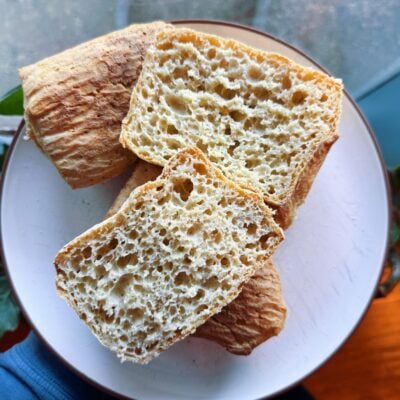
Homemade, Gluten Free Ciabatta Bread Rolls Recipe
These gluten-free ciabatta rolls are the perfect addition to your homemade gluten-free bread collection! With a crispy, golden-brown crust and a soft, chewy interior, they deliver the delicious texture of traditional ciabatta without the gluten. Made with a gluten-free bread flour blend, whole psyllium husk, olive oil, and a few pantry staples, these rolls are ideal for sandwiches, dipping in olive oil, or serving alongside your favorite soups and salads.
Ingredients
- 3 tablespoons whole psyllium husk not powdered
- ½ cup warm water
- 315 grams gluten-free bread flour blend I use my gluten-free bread flour blend which is a blend of sorghum flour, millet flour and tapioca flour.
- 2½ teaspoons instant yeast
- 1 teaspoon salt
- 1 tablespoon sugar
- 1 cup warm water about 115°F
- 2 tablespoons olive oil
- 2 teaspoons apple cider vinegar
Instructions
- Prepare the psyllium gel.In a small bowl, combine the whole psyllium husk and ½ cup warm water. Stir well and let the mixture rest for 5–10 minutes, or until it thickens into a gel. This helps bind the dough and gives the rolls a chewy, bread-like texture.
- Combine the dry ingredients. In the bowl of a stand mixer fitted with the paddle attachment, combine the gluten-free bread flour, instant yeast, and salt. Mix on low speed until evenly distributed.
- Warm the water and sugar. In a small saucepan over the stove, gently warm the remaining 1 cup of water with the sugar until the sugar dissolves and the mixture reaches approximately 115°F. Avoid overheating the water, as excessive heat can damage the yeast.
- Add the liquid ingredients. With the mixer running on low speed, slowly pour the warm sugar water into the dry ingredients. Add the prepared psyllium gel, olive oil, and apple cider vinegar.
- Mix the dough. Increase the mixer to medium speed and mix for 2–3 minutes, scraping down the sides of the bowl as needed. The dough should be thick, sticky, and moist rather than firm like traditional wheat bread dough. This consistency is normal for gluten-free ciabatta.
- Shape the rolls. Turn the dough onto a lightly floured surface using gluten-free flour, or lightly oil your work surface to prevent sticking. Gently shape the dough into a rectangle approximately 10 × 8 inches. Try not to add too much extra flour, as this can make the rolls dry.
- Divide and proof. Using a sharp knife or bench scraper, divide the dough into 6 roughly equal pieces. Line a baking sheet with a piece of parchment paper and transfer the rolls to the pan, leaving space between each roll. Cover loosely with plastic wrap or a damp kitchen towel and let rise for 1 hour in a warm place. I prefer my oven with the light on. The rolls should look slightly puffed.
- Preheat the oven and prepare for steam. With 15 minutes remaining in the rise, place an inverted baking sheet or baking steel on the middle rack and a cast-iron pan on the bottom rack. Preheat the oven to 500°F. Allow the baking surface to heat thoroughly so the rolls begin baking immediately when transferred.
- Transfer the rolls and create steam. Carefully slide the parchment paper with the ciabatta dough rolls onto the preheated sheet pan or steel. Add 4–5 ice cubes to the preheated cast-iron pan to create steam, then close the oven door promptly. The steam helps the rolls develop a crisp crust while allowing them to expand during the initial stage of baking. Use caution when adding ice to a hot pan, as steam can cause burns.
- Bake at high heat. Bake the rolls at 500°F for 15 minutes. The initial high temperature encourages oven spring and helps establish the crust.
- Lower the temperature and finish baking. Reduce the oven temperature to 425°F and carefully remove the cast-iron pan once it is safe to handle. Continue baking for another 15 minutes, or until the rolls are golden brown and the crust feels firm. If needed, bake for a few additional minutes to ensure the centers are fully cooked.
- Cool before serving. Transfer the rolls to a wire cooling rack and let them cool for at least 20 minutes before slicing or eating. Gluten-free bread continues to set as it cools, so cutting into the rolls too soon can result in a gummy interior.
- Store leftovers. Once completely cool, store the rolls in an airtight container or zip-top bag at room temperature for up to 2 days. For longer storage, freeze them in a freezer-safe bag for up to 3 months. Thaw at room temperature and warm briefly in the oven to refresh the crust.