Homemade Gluten-Free Oatmeal Cream Pies Recipe
This blog may contain affiliate links from which I earn a small commission.
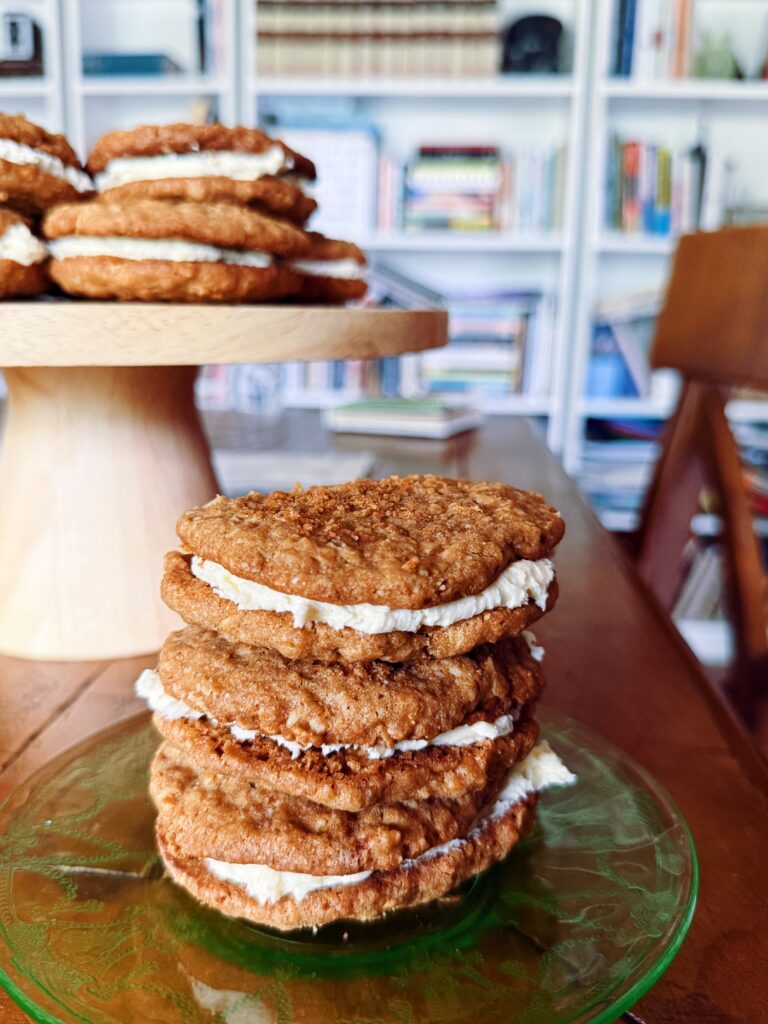
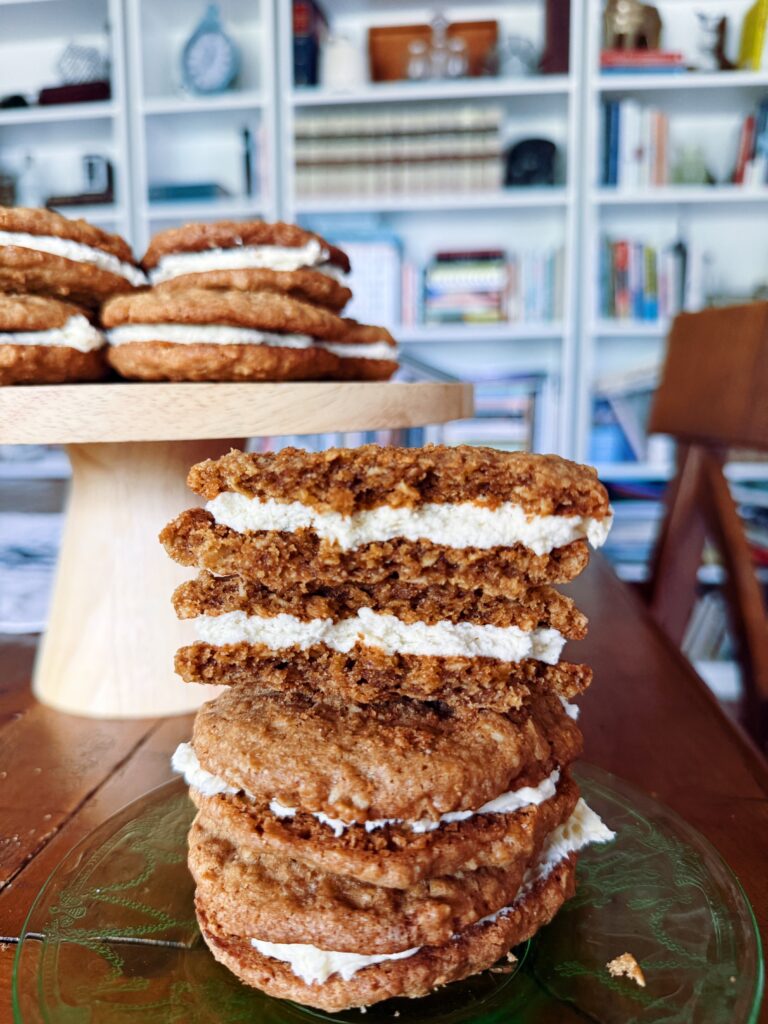
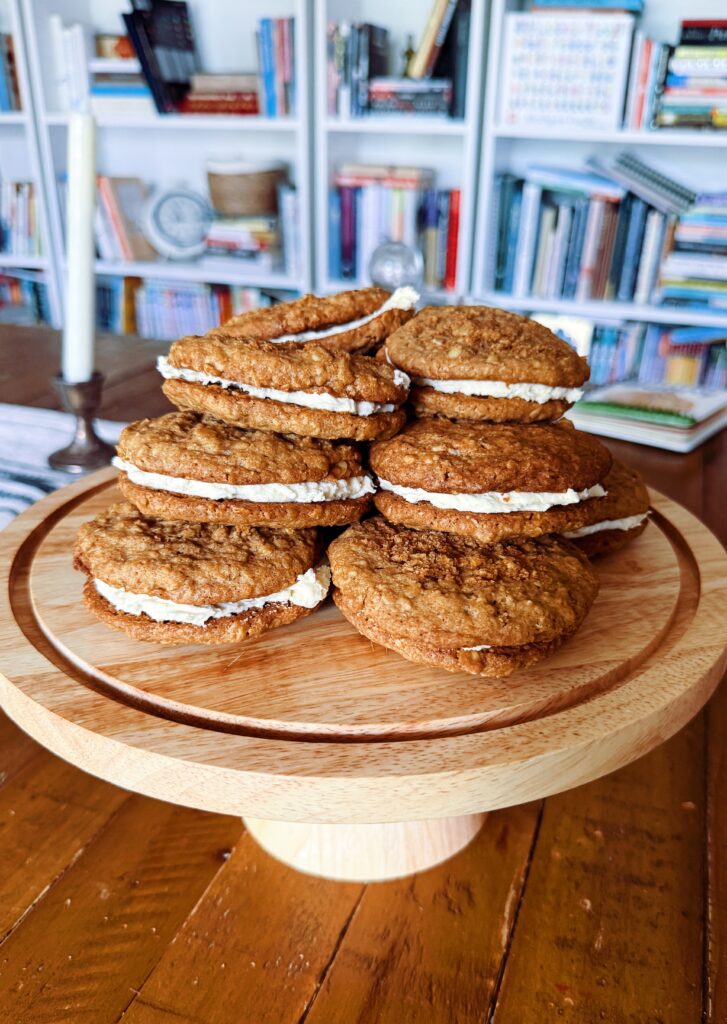
These little darlins are Little Debbie Oatmeal Cream Pies wanna be’s but actually way better AND they are gluten-free! A perfect nostalgic treat!
I have wanted to recreate Little Debbie’s Oatmeal Creme Pies albeit gluten-free for awhile now, and finally carved out some time to do so. Somehow making a frosted cookie felt like more work. How silly.
Growing up, my mom did not buy junk food. I remember going with her to Alberston’s just hoping when we walked down the cookie aisle she would grab a package of Oreos or Little Debbie’s. Did she? Nope. And honestly, as a mom myself now, I do the same thing. My motto: say no to the junk and make it homemade instead.
So this past weekend, Halloween weekend, when the sugar rushes were raging, I added to it with a batch of, if I do say so myself, delicious oatmeal cream pies. My boys taste-tested and approved. Even my harshest food critique (Corey) gave it a raving review! I will say, they definitely satisfy a sweet tooth – just half of one with an afternoon black coffee will do! But it’s my favorite treat right now with all the cozy flavors, and I know you will love them too!
Why You Will Love This Recipe:
- Soft and chewy texture: Combining rolled oats and quick oats gives these cookies the perfect balance of hearty chewiness and softness.
- Warm, cozy flavors: Cinnamon, nutmeg, brown sugar, and molasses create a rich, warmly spiced oatmeal cookie that tastes like homemade comfort.
- Creamy vanilla buttercream: The fluffy vanilla buttercream adds a sweet, buttery layer that pairs beautifully with the spiced oatmeal cookies.
- Perfectly portioned: Using a 2 tablespoon cookie scoop creates evenly sized cookies that bake consistently and are easy to frost.
- Make-ahead friendly: The cookie dough can be prepared ahead of time and refrigerated until you’re ready to bake.
- A fun twist on a classic: These cookies take traditional oatmeal cookies to the next level with a generous layer of homemade vanilla buttercream.
- Simple Ingredients: Made with ingredients found at your local grocery store!
Ingredient List:
For the Cookie
- 1 cup rolled oats: Old-fashioned oats provide a hearty texture and chewy bite. They help give the cookies structure while adding a classic oatmeal flavor. Use certified gluten-free oats if needed.
- 1 cup quick oats: Quick oats are smaller and thinner than rolled oats, helping create a softer, more cohesive cookie texture. Using both types of oats gives the cookies a nice balance of chewiness and tenderness.
- 1 1/2 cups gluten-free flour blend: Use an all-purpose flour for the best structure. Aim for a good-quality gluten-free all-purpose flour blend that contains xanthan gum or another binder. I like using Arrowhead Mills gluten-free flour blend.
- 1 teaspoon baking powder: Helps the cookies rise slightly, creating a softer, lighter texture.
- 1 teaspoon baking soda: Encourages spreading and helps the cookies develop lightly crisp edges while keeping the centers soft.
- 1 teaspoon salt: Balances the sweetness and enhances the flavors of the butter, oats, and warm spices.
- 1 1/2 teaspoons cinnamon: Adds warm, sweet spice that pairs beautifully with the oats and brown sugar.
- 1/2 teaspoon nutmeg: Provides a subtle nutty, warm flavor that complements the cinnamon and gives the cookies a cozy, spiced flavor.
- 1 cup butter: Use softened butter at room temperature so it creams easily with the sugars. Butter adds richness, flavor, and tenderness while helping create a soft center and lightly crisp edges.
- 1 cup brown sugar: Adds moisture, chewiness, and a deep caramel-like sweetness. Light or dark brown sugar will work, although dark brown sugar will provide a slightly richer molasses flavor.
- 1/4 cup granulated sugar: Adds sweetness and helps the cookies develop lightly crisp edges.
- 2 large eggs: Bind the ingredients together, provide structure, and add moisture. For best results, use room-temperature eggs so they incorporate evenly into the butter and sugar mixture.
- 1 tablespoon molasses: Adds a rich, warm sweetness with a subtle caramel flavor. Molasses also contributes moisture and gives the cookies a deeper flavor.
For the Frosting
- 1 cup (2 sticks) salted butter: Use softened butter at room temperature so it whips easily and creates a smooth, creamy frosting. If using unsalted butter, add a small pinch of salt to balance the sweetness.
- 3 cups powdered sugar: Creates the sweetness and structure of the buttercream. Sift the powdered sugar beforehand to remove any lumps and ensure a silky-smooth frosting.
- 2 teaspoons vanilla extract: Adds classic vanilla flavor and enhances the richness of the butter.
- 2–3 tablespoons heavy cream: Helps thin the frosting to your desired consistency while keeping it light and fluffy. Heavy cream creates a richer, creamier buttercream.
- Pinch of salt (optional): Helps balance the sweetness and brings out the vanilla and buttery flavors.
Tip: For a light and fluffy buttercream, beat the softened butter for 3–5 minutes before gradually adding the powdered sugar. Whip in the vanilla and cream until the frosting is smooth, airy, and easy to spread or pipe.
Instructions:
- Combine the dry ingredients: In a large mixing bowl, whisk together the rolled oats, quick oats, flour, baking powder, baking soda, salt, cinnamon, and nutmeg until evenly combined. Set aside.
- Cream the butter and sugars: In the bowl of a stand mixer fitted with the paddle attachment, beat the softened butter, brown sugar, and granulated sugar for 2–3 minutes until light and fluffy.
- Add the wet ingredients: Mix in the eggs one at a time, scraping down the sides of the bowl as needed. Add the molasses and vanilla extract (if using in the cookie dough) and mix until incorporated.
- Add the dry ingredients: Gradually add the oat and flour mixture to the wet ingredients. Mix on low speed just until combined. Avoid overmixing to keep the cookies tender.
- Chill the dough: Cover the mixing bowl with plastic wrap and refrigerate the cookie dough for 45 minutes. Chilling helps the oats absorb moisture, firms up the butter, and prevents the cookies from spreading too much while baking.
- Preheat the oven: Preheat your oven to 350°F. Line two baking sheets with parchment paper.
- Scoop the cookies: Using a 2-tablespoon cookie scoop, portion the chilled dough onto the prepared cookie sheet, leaving about 2 inches between each cookie to allow for spreading. Although, you can adjust the size of your cookies with the scoop your choose, but make sure to adjust the bake time. If you want larger cookies, use a 3 tablespoon, if you want smaller cookies use a 1.5 tablespoon scoop.
- Bake: Bake for approximately 10–12 minutes, or until the edges are lightly golden brown and the centers look just slightly underbaked. The cookies will continue to set as they cool.
- Cool: Allow the cookies to rest on the baking sheet for 5 minutes before transferring them to a wire rack to cool completely.
- Prepare the vanilla buttercream: In a stand mixer fitted with the paddle attachment, beat the softened butter for 3–5 minutes until pale and fluffy. Gradually add the powdered sugar, mixing on low speed until incorporated. Add the vanilla, salt (if using), and 2 tablespoons of cream or milk. Beat until light, smooth, and fluffy. Add additional cream as needed to reach your desired consistency. Scoop frosting into a piping bag (I prefer a plastic disposable).
- Frost the cookies: Once the cookies are completely cooled, spread or pipe a generous layer of vanilla buttercream over each cookie. Allow the frosting to set slightly before serving.
Storage: Store frosted cookies in an airtight container or a ziplock bag in the refrigerator for up to 5 days. Let them sit at room temperature briefly before serving for the softest texture.
Tips and Tricks:
- Use both types of oats: Rolled oats provide a hearty, chewy texture, while quick oats help create a softer cookie. I recommend using both for the best results.
- Measure your flour carefully: If using gluten-free flour, measure by weight when possible. Too much flour can make the cookies dry or crumbly.
- Use room-temperature ingredients: Softened butter and room-temperature eggs help the ingredients incorporate evenly and create a consistent cookie dough.
- Don’t skip chilling: Refrigerate the dough for 45 minutes before baking. This allows the oats to absorb moisture, firms up the butter, and helps prevent excessive spreading.
- Avoid overbaking: Remove the cookies when the edges are lightly golden and the centers still look slightly soft. They will continue baking as they cool.
- Cool completely before frosting: Make sure the cookies are completely cooled before adding the buttercream. Otherwise, the frosting will melt and slide off.
- Whip the buttercream: Beat the butter for several minutes before adding the powdered sugar. This creates a lighter, fluffier frosting.
- Adjust frosting consistency: Add milk or heavy cream a little at a time. Use less for a thicker frosting that’s easy to pipe and more for a softer frosting that’s easy to spread.
- Make ahead: You can prepare the cookie dough a day ahead and keep it covered in the refrigerator. You can also make the buttercream ahead and refrigerate it. Bring it to room temperature and re-whip before using.
- Storage: Store frosted cookies in an airtight container in the refrigerator for up to 5 days. Allow them to sit at room temperature for a few minutes before serving.
Summary:
These chewy oatmeal cookies with vanilla buttercream creamy filling are a delicious twist on a classic homemade oatmeal cookie. Made with a combination of rolled oats and quick oats, they have a soft, chewy texture with just the right amount of heartiness. Brown sugar and molasses add a rich sweetness, while cinnamon and nutmeg bring warm, cozy flavors to every bite.
The cookies are chilled before baking to help create perfectly thick, tender cookies with lightly golden edges. Once cooled, each cookie is topped with a generous layer of homemade vanilla buttercream. The frosting is smooth, fluffy, and wonderfully sweet, making these cookies feel like a little bakery-style treat right at home.
They’re perfect for holiday cookie trays, afternoon treats, bake sales, or whenever you’re craving a soft oatmeal cookie with something extra special. If you love classic oatmeal cookies but want to dress them up a bit, this recipe is sure to become a favorite!
Check out the recipe card below to make yourself a batch of delicious gluten-free oatmeal cream pies!
Happy Baking!

Homemade Gluten-Free Oatmeal Cream Pies Recipe
Equipment
Ingredients
Oatmeal Cookies
- 1 cup rolled oats
- 1 cup quick oats
- 1 1/2 cups gluten-free flour I like Arrowhead Mills Gluten-Free Blend
- 1 tsp baking powder
- 1 tsp baking soda
- 1 tsp salt
- 1 1/2 tsp cinnamon
- 1/2 tsp nutmeg
- 1 cup softened butter
- 1 cup brown sugar
- 1/4 cup granulated sugar
- 2 eggs
- 1 tbsp molasses
Vanilla Buttercream
- 1 cup softened butter
- 3 cups powdered sugar
- 2 tsp vanilla extract
- 2 –3 tbsp milk or heavy cream
- Pinch of salt optional
Instructions
- Whisk together oats, flour, baking powder, baking soda, salt, cinnamon, and nutmeg.
- In a stand mixer, cream butter and both sugars until light and fluffy.
- Add eggs one at a time, followed by molasses. Mix until combined.
- Gradually add the dry ingredients and mix until just incorporated.
- Cover and refrigerate dough for 45 minutes.
- Preheat oven to 350°F and line baking sheets with parchment paper.
- Use a 2-tablespoon cookie scoop to portion dough onto baking sheets, spacing 2 inches apart.
- Bake for 10–12 minutes, until edges are lightly golden. Cool on the baking sheet for 5 minutes, then transfer to a wire rack.
- For the buttercream, beat butter until fluffy. Gradually add powdered sugar, vanilla, and cream. Whip until smooth and creamy.
- Once cookies are completely cool, spread or pipe buttercream onto each cookie.
Notes
- Use both types of oats: Rolled oats provide a hearty, chewy texture, while quick oats help create a softer cookie. I recommend using both for the best results.
- Measure your flour carefully: If using gluten-free flour, measure by weight when possible. Too much flour can make the cookies dry or crumbly.
- Use room-temperature ingredients: Softened butter and room-temperature eggs help the ingredients incorporate evenly and create a consistent cookie dough.
- Don’t skip chilling: Refrigerate the dough for 45 minutes before baking. This allows the oats to absorb moisture, firms up the butter, and helps prevent excessive spreading.
- Avoid overbaking: Remove the cookies when the edges are lightly golden and the centers still look slightly soft. They will continue baking as they cool.
- Cool completely before frosting: Make sure the cookies are completely cooled before adding the buttercream. Otherwise, the frosting will melt and slide off.
- Whip the buttercream: Beat the butter for several minutes before adding the powdered sugar. This creates a lighter, fluffier frosting.
- Adjust frosting consistency: Add milk or heavy cream a little at a time. Use less for a thicker frosting that’s easy to pipe and more for a softer frosting that’s easy to spread.
- Make ahead: You can prepare the cookie dough a day ahead and keep it covered in the refrigerator. You can also make the buttercream ahead and refrigerate it. Bring it to room temperature and re-whip before using.
- Storage: Store frosted cookies in an airtight container in the refrigerator for up to 5 days. Allow them to sit at room temperature for a few minutes before serving.