
Delicious Gluten Free Blueberry Cake + Lemon Frosting
My sweet mom would take us blueberry every year, and it is a tradition I have continued with my own boys. And while I do love sharing the experience with them, they end up hunting for frogs more than actually blueberry picking, HA!
This Gluten Free Blueberry Cake is the perfect balance of tender, moist crumb and bursts of juicy blueberries in every slice. Made with a carefully blended mix of gluten free flour, potato starch, and sour cream, it bakes up soft and fluffy without anyone ever guessing it’s gluten free. The fresh blueberries bring a natural sweetness and pop of color, while the simple vanilla base makes it versatile enough to pair with cream cheese frosting, lemon glaze, or just a dusting of powdered sugar. Whether you’re baking for a birthday, brunch, or simply to enjoy with your morning coffee, this cake is a showstopper that’s as beautiful as it is delicious.

Why You Will Love This Recipe:
- Light, Tender, and Moist – Thanks to sour cream, egg whites, and potato starch, the crumb is delicate without being dry or crumbly (a common gluten free struggle).
- Bursting with Blueberries – Every bite is packed with juicy, fresh blueberries that add natural sweetness and a pop of color.
- Gluten Free (and Nobody Will Know!) – Made with a well-balanced gluten free flour blend, this cake has the same texture and flavor as a traditional bakery-style layer cake.
- Versatile for Any Occasion – Whether you serve it plain with coffee, dress it up with frosting for a birthday, or pair it with whipped cream at brunch, it fits every setting.
- Easy to Make Ahead – The layers bake up beautifully and can be made a day in advance, making assembly stress-free.
- Customizable – Keep it classic with vanilla frosting, brighten it with lemon glaze, or add a cream cheese frosting for a tangy twist.
Ingredients:
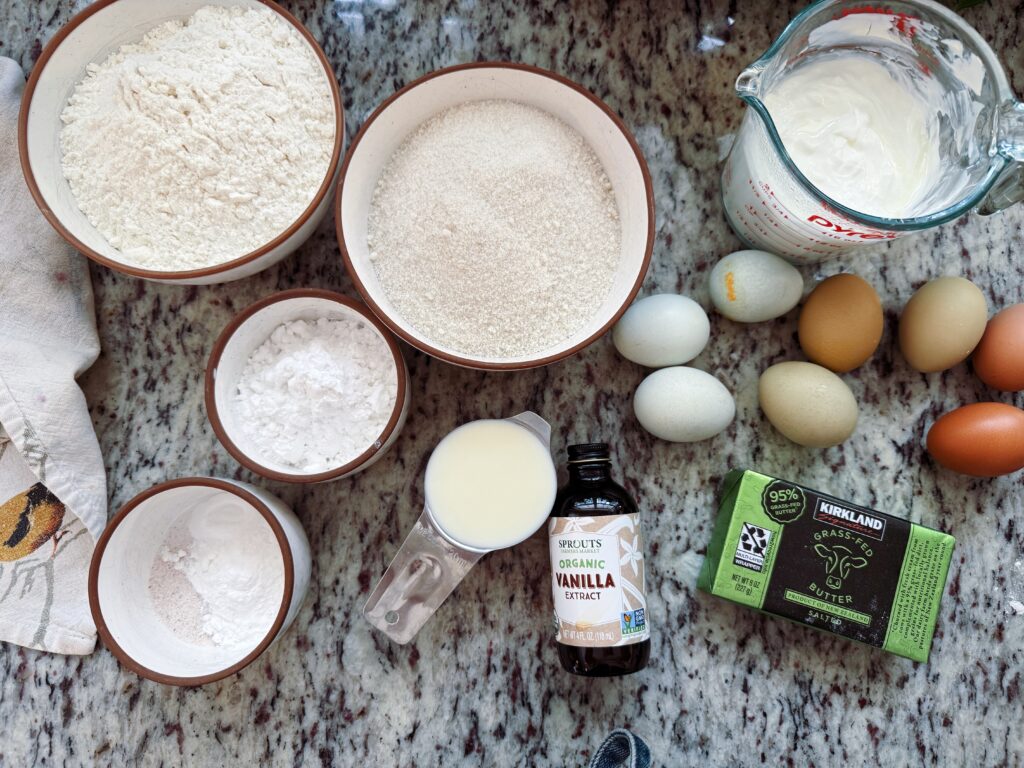
For the Cake
- 2 1/4 cups granulated sugar – for sweetness and structure.
- 15 tablespoons unsalted butter, softened – brings richness and moisture; make sure it’s at room temperature for easy creaming.
- 1 1/2 cups sour cream – keeps the cake tender and adds a slight tang to balance the sweetness.
- 1/2 cup milk – use whole milk for best texture, or substitute with a dairy-free milk if needed.
- 2 large eggs, room temperature – help with structure and binding.
- 6 large egg whites, room temperature – add lightness and keep the crumb fluffy.
- 3 teaspoons pure vanilla extract – for warm, sweet flavor.
- 3 cups gluten free all-purpose flour blend – choose one that already contains xanthan gum or guar gum if you prefer to omit the added binder. I prefer Arrowhead Mills, but Bob’s Red Mill works well too!
- 9 tablespoons potato starch – provides tenderness and lightness to the crumb.
- 1 tablespoon guar gum – improves structure and elasticity (omit if your flour blend already includes xanthan gum or guar gum).
- 1 tablespoon baking powder – leavening agent for lift.
- 3/4 teaspoon baking soda – works with the sour cream for extra rise.
- 1 teaspoon salt – balances sweetness and enhances flavor.
- 2 cups fresh blueberries – rinse and pat dry before folding in; toss lightly with 1 tablespoon of the flour mixture to help prevent sinking during baking.
For the Buttercream
- 3 sticks salted butter, softened to room temperature (some will say ONLY unsalted butter, but I always use salted and it’s my personal preferance!)
- 1 1/2 pounds (about 7 cups) powdered sugar (confectioner’s sugar), sifted
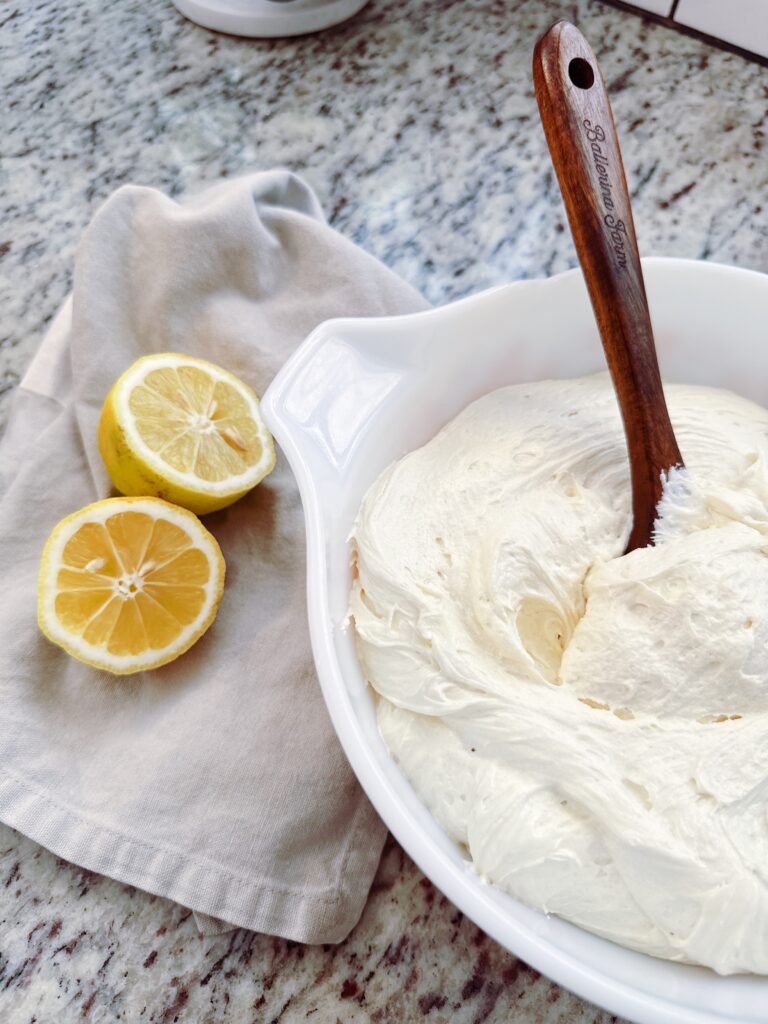
- 1/4 cup freshly squeezed lemon juice (from about 2 lemons)
- 1–2 tablespoons heavy whipping cream (adjust for consistency)
- 1–2 teaspoons vanilla extract
- (Optional: zest from 1 lemon for added brightness)

Instructions:
For the Cake
- Prepare the pans
- Grease the sides of each three 8-inch or 9-inch round cake pan with butter or nonstick spray.
- Line the bottoms with parchment paper rounds to prevent sticking and ensure clean removal after baking.
- Set aside.
- Preheat the oven
- Heat your oven to 350°F (175°C) so it’s ready when the batter is done.
- Cream the butter and sugar
- In the bowl of a stand mixer fitted with the paddle attachment, beat the softened butter and granulated sugar together on medium speed until light, fluffy, and pale in color, about 3–5 minutes.
- Stop halfway through to scrape down the sides and bottom of the bowl so everything mixes evenly.
- Mix the wet ingredients
- In a medium mixing bowl, whisk together the eggs, egg whites, sour cream, milk, and vanilla extract until smooth and well combined.
- Set aside.
- Mix the dry ingredients
- In another medium bowl, whisk together the gluten free flour blend, potato starch, guar gum (if using), baking powder, baking soda, and salt.
- This helps prevent clumps and ensures the leavening agents are evenly distributed.
- Combine the batter
- Reduce the stand mixer speed to medium-low.
- Add the dry and wet ingredients alternately to the butter-sugar mixture: begin with 1/3 of the wet, then 1/3 of the dry, repeating until all is incorporated, and ending with the wet mixture.
- Mix only until just combined; do not overmix or the cake may become dense.
- The batter will be thick but smooth.
- Fold in blueberries
- Gently toss the blueberries with 1 tablespoon of the dry flour mixture to coat them lightly (this prevents them from sinking).
- Fold the blueberries into the batter with a spatula until evenly distributed.
- Fill the pans
- Divide the batter evenly among the prepared cake pans.
- Use an offset spatula or the back of a spoon to spread the batter into an even layer and smooth the tops.
- Bake the cakes
- Place pans on the center rack of the oven.
- Bake for 15 minutes, rotate the pans for even baking, then continue baking for another 15–20 minutes.
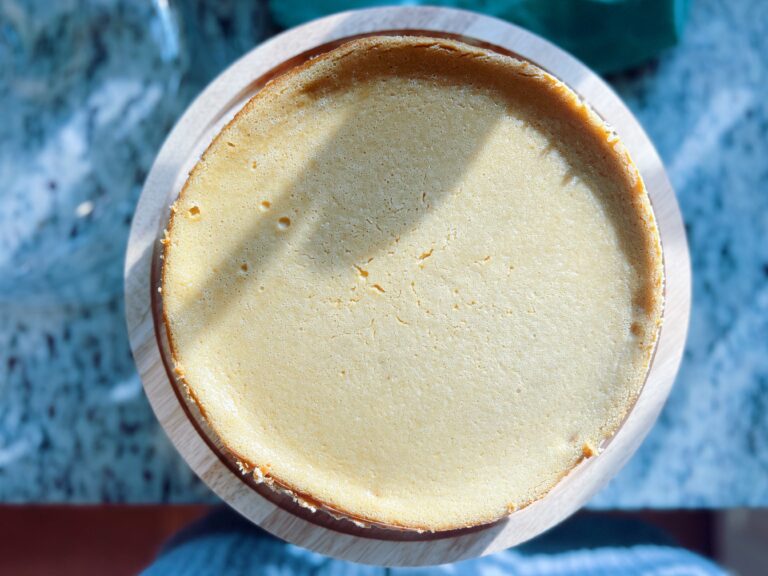
- The cakes are done when the tops are golden brown and a toothpick inserted into the center comes out with only a few moist crumbs (no wet batter).
- Cool the cakes
- Remove pans from the oven and allow cakes to cool in the pans for about 15 minutes.
- Run a thin knife around the edges if needed, then carefully invert the cakes onto wire racks.
- Peel off parchment paper and allow the cakes to cool completely before frosting.

For the Buttercream
- Cream the butter:
In the bowl of a standing mixer fitted with the paddle attachment, beat the softened butter on medium speed for 2–3 minutes until it is light, creamy, and pale in color. This step helps develop a fluffy texture. You could also use an electric mixer / hand mixer and a large bowl. - Add powdered sugar gradually:
Reduce mixer speed to low. Slowly add the sifted powdered sugar, 1 cup at a time, mixing after each addition. Scrape down the sides of the bowl as needed to ensure even mixing. Once all sugar is incorporated, beat on medium speed for 1 minute to fluff it up. - Incorporate lemon juice and vanilla:
With the mixer on low, add the lemon juice and vanilla extract. Increase to medium speed and beat for 1–2 minutes until fully incorporated. The frosting should become slightly looser and take on a bright, citrusy aroma. - Adjust consistency:
Add 1 tablespoon of heavy whipping cream and beat again on medium-high speed for 3-5 minutes. If the frosting seems too thick, add the second tablespoon of cream. If it’s too loose, add a little more sifted powdered sugar. Beat until smooth and airy. - Optional lemon zest:
For a more intense lemon flavor and beautiful speckled look, fold in the zest of one lemon using a spatula.
For Assembly
- To layer cake, place the first cake layer top side up, in the center of the cake board. Spread buttercream atop, then pipe a rim of the buttercream around the edge of the cake and fill the center with lemon curd.
- Place the second cake layer on top of the buttercream and filling, bottom side down. Repeat piping and filling.
- Place final cake layer, top side down (flip it so the flat bottom is facing up).
- Place straws or popsicle sticks into the center of the cakes and three additional ones around the center, about 2 inches out.
- Crumb coat the entire cake with a thin, even layer of the buttercream, covering the sides of the cake and the top of the cake in buttercream. Pop it into the freezer for about 10 to 15 minutes to set this layer of frosting.
- Once the crumb coat is set, continue to frost the cake with the remaining frosting. I like to use a cake edger or scraper, but you don’t have to use this. You can always create a rustic look with a spatula.
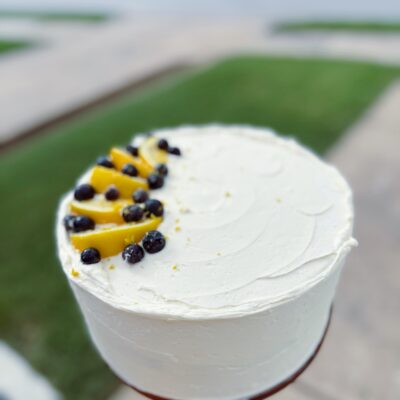
- Decorate the top of the cake however your heart desires! I love using the lemon curd and/or lemon slices or chopped blueberries!

Perfect Pairings
Beverages
- Hot Coffee or Espresso – the bold, roasted notes balance the sweetness of the cake.
- Earl Grey or Chamomile Tea – floral teas highlight the blueberry flavor beautifully.
- Sparkling Lemon Water – refreshing and light, perfect for keeping the dessert from feeling too heavy.
- A Glass of Prosecco or Moscato – the bubbles and slight sweetness pair wonderfully with berries.
Fresh & Fruity Sides
- Lemon Curd – tart, creamy, and zesty, it makes a dreamy pairing with blueberries.
- Fresh Mixed Berries – strawberries, raspberries, and blackberries for a colorful platter alongside slices.
- Citrus Segments (like orange or grapefruit) – bright acidity enhances the fruit notes in the cake.
Ice Cream & Sauces
- Vanilla Bean Ice Cream – a classic pairing that never fails.
- Lemon Sorbet – light, tangy, and palate-cleansing.
- Warm Blueberry Compote – double down on the blueberry flavor by spooning some over each slice.
- White Chocolate Drizzle – sweet, creamy, and decadent.
Extra Indulgence
- Whipped Cream with a Hint of Lemon Zest – fluffy, light, and citrusy.
- Cream Cheese Frosting – tangy and rich, if you’re not already frosting the cake with it.
- Candied Pecans or Walnuts – add crunch and a nutty note to each bite.

Tips & Tricks for the Best Gluten Free Blueberry Cake
- Room-Temperature Ingredients Matter – For best result, set your butter, eggs, and milk come to room temp before baking. This helps them blend smoothly and creates a tender, even crumb.
- Toss Blueberries in Flour – Lightly coat the blueberries with a spoonful of flour mixture before folding them into the batter. This helps prevent them from sinking to the bottom of the cake.
- Don’t Overmix the Batter – Once the wet and dry ingredients come together, stop mixing! Overmixing can lead to a dense or gummy gluten free cake.
- Check for Doneness Early – Ovens vary, so start testing your cakes with a toothpick a few minutes before the recipe time ends. Look for a few moist crumbs, not wet batter.
- Cool Completely Before Frosting – Gluten free cakes can be more delicate when warm. Let layers cool fully on a wire rack to avoid tearing or melting your frosting.
- Make Ahead for Easier Assembly – Bake the layers a day ahead, wrap tightly in plastic wrap, and refrigerate. Chilled layers are easier to frost without crumbs pulling up.
- Use Parchment Paper Rounds – Line the bottom of your pans with parchment to guarantee the cakes release cleanly.
- Level Layers if Needed – If your cakes dome slightly, use a serrated knife to trim the tops flat. This makes for a more professional-looking layer cake.
- Add a Flavor Boost – Try adding lemon zest to the batter for a bright citrus note that pairs beautifully with blueberries.
- Slice Cleanly – For neat cake slices, run a sharp knife under hot water, dry it, then cut. Wipe the blade clean between slices.

Storage Tips and Tricks
- Room Temperature: If unfrosted, wrap cake layers tightly in plastic wrap once cooled. They’ll stay fresh at room temperature for up to 2 days. If frosted with a butter-based or cream cheese frosting, store covered at room temp for up to 1 day.
- Refrigerator: For longer storage, place the frosted cake in an airtight container or cover loosely with plastic wrap. Refrigerated cake will keep well for 4–5 days. To enjoy, let slices sit at room temperature for 20–30 minutes so the crumb softens again.
- Freezer:
- Cake Layers: Wrap cooled, unfrosted layers individually in plastic wrap, then foil, and place in a freezer bag. Freeze for up to 2 months. Thaw overnight in the fridge before frosting.
- Frosted Cake: Freeze slices on a parchment-lined baking sheet until firm, then wrap individually in plastic wrap and foil. Store for up to 1 month. Perfect for pulling out a single serving when the craving hits!
- Prevent Sogginess from Blueberries: Be sure to dry blueberries thoroughly before folding into the batter—excess moisture can shorten storage time.
- Best for Serving: This cake tastes best the day it’s baked or the following day, after the flavors have melded and the crumb has settled.

Check out the recipe card below for this delicious, crowd-pleasing gluten free cake recipe!
Delicious Gluten Free Blueberry Cake + Lemon Frosting
Ingredients
For the Cake
- 2 1/4 cups granulated sugar
- 15 tablespoons unsalted butter softened
- 1 1/2 cups sour cream
- 1/2 cup milk use whole milk for best texture or substitute with a dairy-free milk if needed.
- 2 large eggs room temperature
- 6 large egg whites room temperature
- 3 teaspoons pure vanilla extract
- 3 cups gluten free all-purpose flour blend – choose one that already contains xanthan gum or guar gum if you prefer to omit the added binder. I prefer Arrowhead Mills but Bob's Red Mill works well too!
- 9 tablespoons potato starch
- 1 tablespoon guar gum omit if your flour blend already includes xanthan gum or guar gum.
- 1 tablespoon baking powder
- 3/4 teaspoon baking soda
- 1 teaspoon salt
- 2 cups fresh blueberries rinse and pat dry before folding in; toss lightly with 1 tablespoon of the flour mixture to help prevent sinking during baking.
For the Frosting
- 3 sticks salted butter softened to room temperature (some will say ONLY unsalted butter, but I always use salted and it’s my personal preferance!)
- 1 1/2 pounds about 7 cups powdered sugar (confectioner’s sugar), sifted
- 1/4 cup freshly squeezed lemon juice from about 2 lemons
- 1-2 tablespoons heavy whipping cream adjust for consistency
- 1-2 teaspoons vanilla extract
- Optional: zest from 1 lemon for added brightness
Instructions
For the Cake
- Grease the sides of each three 8-inch or 9-inch round cake pan with butter or nonstick spray.
- Line the bottoms with parchment paper rounds to prevent sticking and ensure clean removal after baking.
- Heat your oven to 350°F (175°C) so it’s ready when the batter is done.
- In the bowl of a stand mixer fitted with the paddle attachment, beat the softened butter and granulated sugar together on medium speed until light, fluffy, and pale in color, about 3–5 minutes.
- Stop halfway through to scrape down the sides and bottom of the bowl so everything mixes evenly.
- In a medium mixing bowl, whisk together the eggs, egg whites, sour cream, milk, and vanilla extract until smooth and well combined.
- In another medium bowl, whisk together the gluten free flour blend, potato starch, guar gum (if using), baking powder, baking soda, and salt.
- This helps prevent clumps and ensures the leavening agents are evenly distributed.
- Reduce the stand mixer speed to medium-low.
- Add the dry and wet ingredients alternately to the butter-sugar mixture: begin with 1/3 of the wet, then 1/3 of the dry, repeating until all is incorporated, and ending with the wet mixture.
- Mix only until just combined; do not overmix or the cake may become dense. The batter will be thick but smooth.
- Gently toss the blueberries with 1 tablespoon of the dry flour mixture to coat them lightly (this prevents them from sinking).
- Fold the blueberries into the batter with a spatula until evenly distributed.
- Divide the batter evenly among the prepared cake pans. Use an offset spatula or the back of a spoon to spread the batter into an even layer and smooth the tops.
- Bake for 15 minutes, rotate the pans for even baking, then continue baking for another 15–20 minutes.
- The cakes are done when the tops are golden brown and a toothpick inserted into the center comes out with only a few moist crumbs (no wet batter).
- Remove pans from the oven and allow cakes to cool in the pans for about 15 minutes.
- Run a thin knife around the edges if needed, then carefully invert the cakes onto wire racks.
- Peel off parchment paper and allow the cakes to cool completely before frosting.
For the Buttercream
- In the bowl of a standing mixer fitted with the paddle attachment, beat the softened butter on medium speed for 2–3 minutes until it is light, creamy, and pale in color. This step helps develop a fluffy texture. You could also use an electric mixer / hand mixer and a large bowl.
- Reduce mixer speed to low. Slowly add the sifted powdered sugar, 1 cup at a time, mixing after each addition. Scrape down the sides of the bowl as needed to ensure even mixing. Once all sugar is incorporated, beat on medium speed for 1 minute to fluff it up.
- With the mixer on low, add the lemon juice and vanilla extract. Increase to medium speed and beat for 1–2 minutes until fully incorporated. The frosting should become slightly looser and take on a bright, citrusy aroma.
- Add 1 tablespoon of heavy whipping cream and beat again on medium-high speed for 3-5 minutes. If the frosting seems too thick, add the second tablespoon of cream. If it’s too loose, add a little more sifted powdered sugar. Beat until smooth and airy.
- Optional lemon zest: For a more intense lemon flavor and beautiful speckled look, fold in the zest of one lemon using a spatula.
For Assembly
- To layer cake, place the first cake layer top side up, in the center of the cake board. Spread buttercream atop, then pipe a rim of the buttercream around the edge of the cake and fill the center with lemon curd.
- Place the second cake layer on top of the buttercream and filling, bottom side down. Repeat piping and filling.
- Place final cake layer, top side down (flip it so the flat bottom is facing up).
- Place straws or popsicle sticks into the center of the cakes and three additional ones around the center, about 2 inches out.
- Crumb coat the entire cake with a thin, even layer of the buttercream, covering the sides of the cake and the top of the cake in buttercream. Pop it into the freezer for about 10 to 15 minutes to set this layer of frosting.
- Once the crumb coat is set, continue to frost the cake with the remaining frosting. I like to use a cake edger or scraper, but you don’t have to use this. You can always create a rustic look with a spatula.
- Decorate the top of the cake however your heart desires!


If my gf flour already has potato starch in it do I need to add the extra potato starch?
Yes, I would add the potato starch! It helps create soft texture and light crumb of the cake.